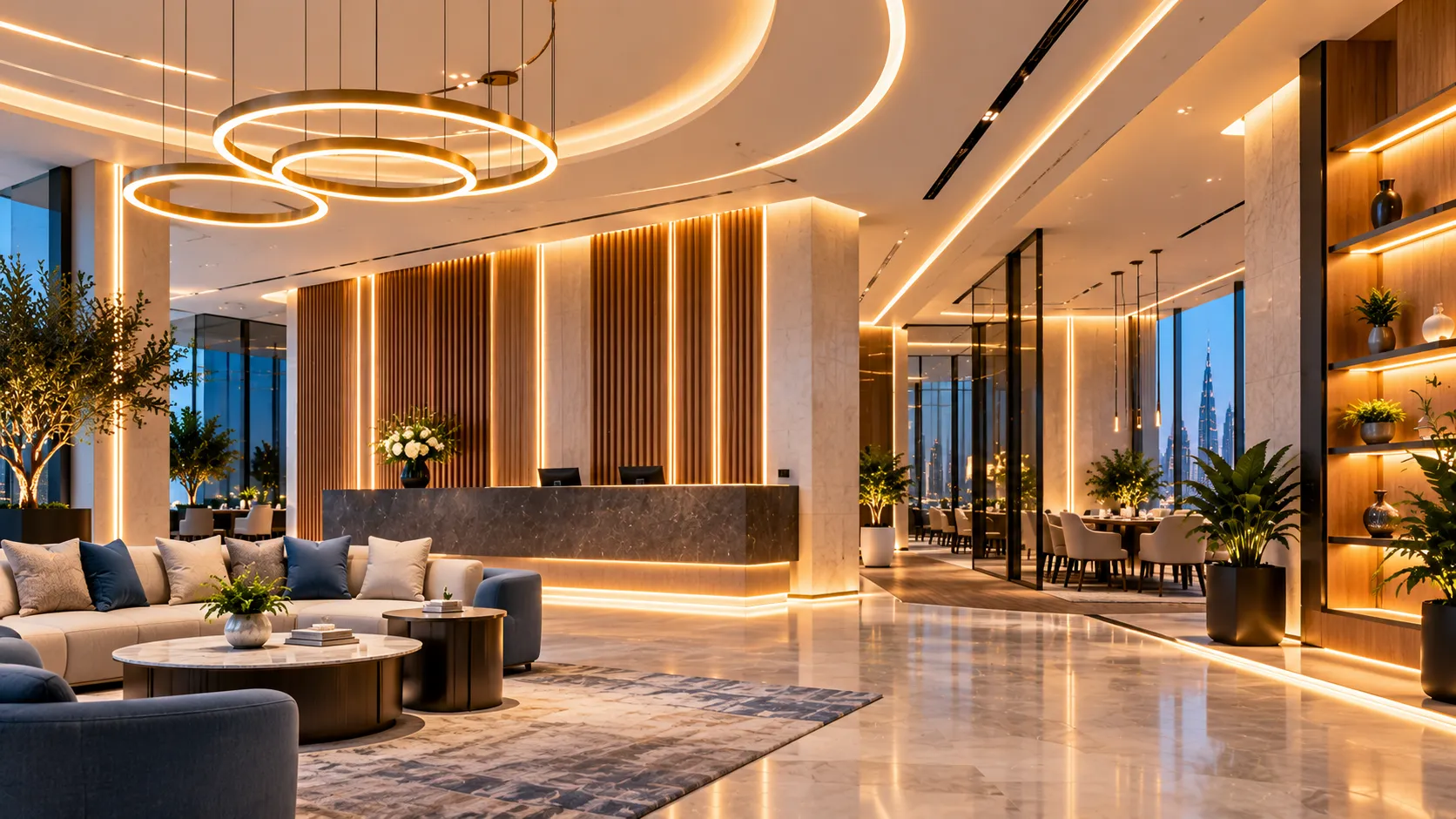
Modern LED Lighting Trends Shaping Gulf Interior Design
Interior design across the Gulf is increasingly combining modern architecture, premium materials and technology. Lighting plays an important role in this evolution because it can influence how materials, spaces and architectural features are perceived.
LED technology gives designers considerable flexibility, allowing lighting to be integrated into almost every part of an interior.
Integrated Ceiling Lighting
One of the strongest trends is the integration of LED lighting directly into ceiling designs.
Linear LED profiles can follow geometric ceiling details, create continuous lines or provide indirect illumination.
This approach works particularly well in offices, hotels, reception areas and luxury commercial interiors.
Concealed and Indirect Lighting
Concealed LED lighting can create soft illumination without exposing the light source.
Cove lighting, recessed profiles and concealed LED strips can be used around ceilings, walls, niches and architectural features.
This technique can add depth and create a refined appearance.
Lighting Integrated Into Joinery
LED lighting is increasingly being incorporated into furniture and architectural joinery.
Cabinet lighting, illuminated shelves, display lighting and integrated linear systems can enhance retail displays, hospitality counters and commercial interiors.
This can be especially effective in luxury retail and showroom environments.
Flexible Linear LED Solutions
Linear LED lighting provides designers with greater freedom than traditional point-source fixtures.
Depending on the system, linear lighting can be installed in straight lines, corners, recessed channels or customised architectural configurations.
This makes it useful for contemporary interiors where lighting needs to follow the geometry of the design.
Warm and Neutral Lighting Combinations
Modern interiors often use different colour temperatures in different areas.
Warm lighting can create a welcoming atmosphere in lounges, restaurants and hospitality areas, while neutral lighting can provide balanced illumination in offices and work environments.
The choice should always reflect the purpose and character of the space.
Accent Lighting for Materials and Textures
LED spotlights and directional fixtures can be used to highlight stone, wood, artwork, textured walls and other materials.
This can help create visual hierarchy within an interior.
In retail environments, accent lighting can also draw attention to products and displays.
Smart Lighting and Dimming
Lighting controls are becoming increasingly relevant in commercial interiors.
Dimming and scene-setting systems can allow a space to change according to time, activity or occasion.
A hotel conference area, for example, may require different lighting scenes for meetings, presentations and events.
Architectural Lighting for Hospitality
Hotels and restaurants often use lighting as part of the customer experience.
Entrance areas can use decorative and architectural lighting to create a strong first impression.
Dining spaces may use warmer, layered lighting, while corridors and circulation areas can use integrated linear systems.
Lighting for Modern Offices
Office interiors increasingly combine functionality with design.
Linear LED systems can provide general illumination while maintaining a minimalist ceiling appearance.
Additional accent and decorative lighting can help differentiate reception areas, collaboration zones and breakout spaces.
Lighting for Retail and Showrooms
Retail lighting requires careful control of brightness, colour rendering and direction.
LED spotlights can focus attention on products, while linear systems can enhance shelves, counters and display areas.
The result should support both the visual identity of the brand and the shopping experience.
The Future of LED Lighting in the Gulf
As commercial architecture across the Gulf continues to evolve, lighting is becoming increasingly integrated with interior design.
The focus is shifting from simply illuminating spaces to creating coordinated environments where architecture, materials, technology and light work together.
Conclusion
Modern LED lighting offers architects and interior designers a wide range of possibilities for Gulf commercial projects.
Integrated linear systems, concealed lighting, smart controls, accent lighting and customised solutions can all contribute to contemporary interiors.
For UAE and wider Middle East projects, the most effective approach is to consider lighting as an integral part of the architectural and interior design process rather than as a final-stage addition.