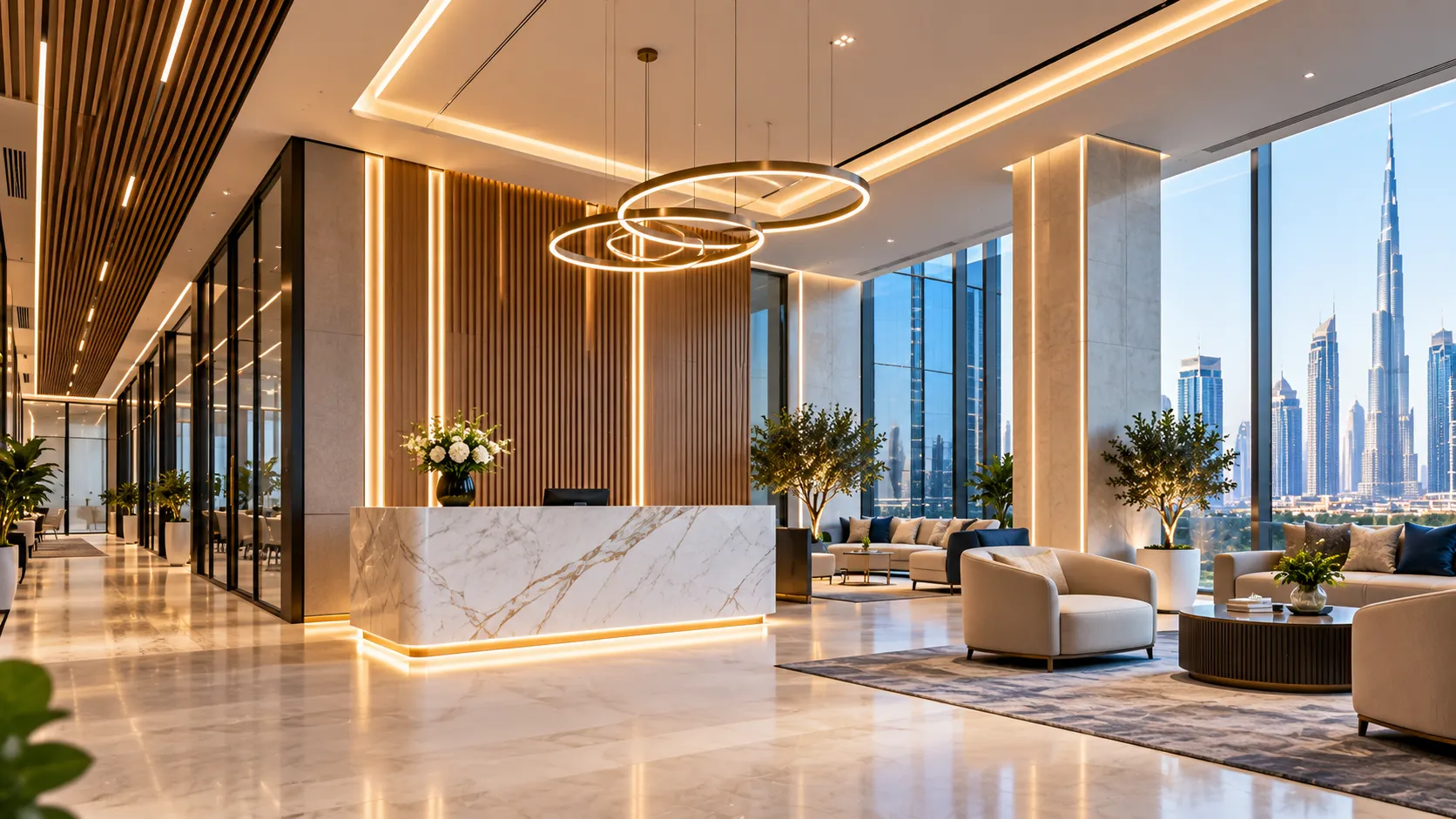
Architectural Lighting Design for Commercial Spaces in the UAE
Commercial architecture in the UAE combines contemporary design, premium materials and sophisticated interiors. From corporate offices and retail stores to hotels, restaurants and showrooms, lighting plays an important role in defining these spaces.
Architectural lighting design combines technical planning with aesthetics to create lighting that supports both the function and appearance of a commercial environment.
What Is Architectural Lighting Design?
Architectural lighting design is the process of planning how artificial light will interact with a building's architecture and interior spaces.
It considers factors such as:
Purpose of the space
Ceiling and wall design
Natural daylight
Colour temperature
Light distribution
Brightness requirements
Architectural materials
Energy consumption
Lighting controls
Maintenance requirements
The objective is to create a lighting environment that works naturally with the architecture rather than competing with it.
Why Is Lighting Important for UAE Commercial Projects?
Commercial spaces in the UAE often place significant emphasis on visual presentation. Reception areas, showrooms, hospitality environments and retail spaces are designed to create strong first impressions.
Lighting can help reinforce this design.
A well-lit reception area can create a welcoming entrance, while carefully positioned accent lighting can highlight premium materials, branding elements or architectural features.
In retail environments, lighting can also help direct attention toward merchandise and create distinct zones within the store.
Architectural Lighting for Offices
Modern offices require lighting that supports productivity, comfort and collaboration.
A layered approach can combine general illumination with focused lighting and decorative elements.
Linear LED lighting can be integrated into ceilings to create clean, contemporary lines, while recessed downlights can provide focused illumination.
Meeting rooms, reception areas, corridors and breakout spaces may each require different lighting approaches.
Lighting for Hotels and Hospitality
Hotels and hospitality environments rely heavily on atmosphere.
Entrance areas can use decorative pendants and architectural lighting to create a strong arrival experience. Corridors may use recessed or linear lighting to provide comfortable guidance, while restaurants and lounges can use warmer lighting to create a more relaxed environment.
The lighting design should complement the materials, furniture and architectural character of the property.
Lighting for Retail Stores and Showrooms
Retail lighting needs to balance general illumination with product-focused lighting.
Spotlights and directional fixtures can highlight products, displays and feature walls, while linear LED lighting can define shelves, counters and architectural details.
Colour rendering is also important when products need to be presented accurately, particularly in fashion, jewellery, furniture and luxury retail environments.
Choosing LED Lighting for UAE Projects
LED technology offers a wide range of options for commercial applications. Designers can select different colour temperatures, lumen outputs, beam angles, fixture types and control systems according to the project.
For architectural applications, solutions such as:
Linear LED profiles
LED strips
Downlights
Track lighting
Spotlights
Magnetic track systems
Cabinet lighting
Decorative fixtures
can be incorporated into different areas of a commercial project.
Considerations for the UAE Climate
Outdoor architectural lighting projects in the UAE require additional consideration because of environmental exposure.
Facade, landscape, entrance and external pathway lighting should be selected according to the installation environment and appropriate protection requirements.
For indoor projects, heat generated by fixtures, ventilation, ceiling construction and installation conditions should also be considered during project planning.
Why Involve Lighting Specialists Early?
Lighting decisions made late in an interior fit-out can create challenges with ceiling layouts, electrical connections, fixture placement and architectural details.
Involving a lighting specialist during the design stage allows lighting requirements to be coordinated with architecture and MEP planning.
This can reduce changes during installation and help achieve a more integrated final result.
Conclusion
Architectural lighting design is an important component of modern commercial spaces in the UAE. When planned alongside architecture and interior design, lighting can enhance functionality, visual presentation and the overall experience of a building.
Whether the project is an office, hotel, retail store, restaurant, showroom or commercial development, a carefully planned LED lighting strategy can help bring the architectural concept to life.